
Disclosure: This post may contain affiliate links. As an associate, I earn from qualifying purchases. This means I may receive a small commission if you choose to make a purchase through one of my links, at no extra cost to you. I only share items that genuinely bring comfort, calm, or creativity.
Physical effects of grief are often overlooked, but they can be just as real as the emotional pain of loss. When someone you love dies, your entire world shifts, and your body can feel that loss deeply. You may wake up exhausted, feel a heaviness in your chest, or notice aches and tension that weren’t there before. The truth is, the body remembers — and grief lives inside it.
In this post, we’ll explore the most common physical symptoms of grief, how grief affects your body, and gentle ways to care for yourself as you heal.
💔 The Physical Weight of Grief
After loss, the body reacts as though it’s under threat. The same stress hormones that help you survive a crisis flood your system — cortisol, adrenaline, and norepinephrine. These chemicals are useful in emergencies, but when they stay high for weeks or months (as they often do during grief), they can cause real physical exhaustion.
That’s why you may feel:
- Constant fatigue
- Muscle tension or headaches
- Stomach pain or nausea
- Racing heart or shortness of breath
- Tightness in your chest
Grief is a full-body experience. It’s not weakness. It’s the body’s way of trying to process trauma and adjust to a world without the person you love.
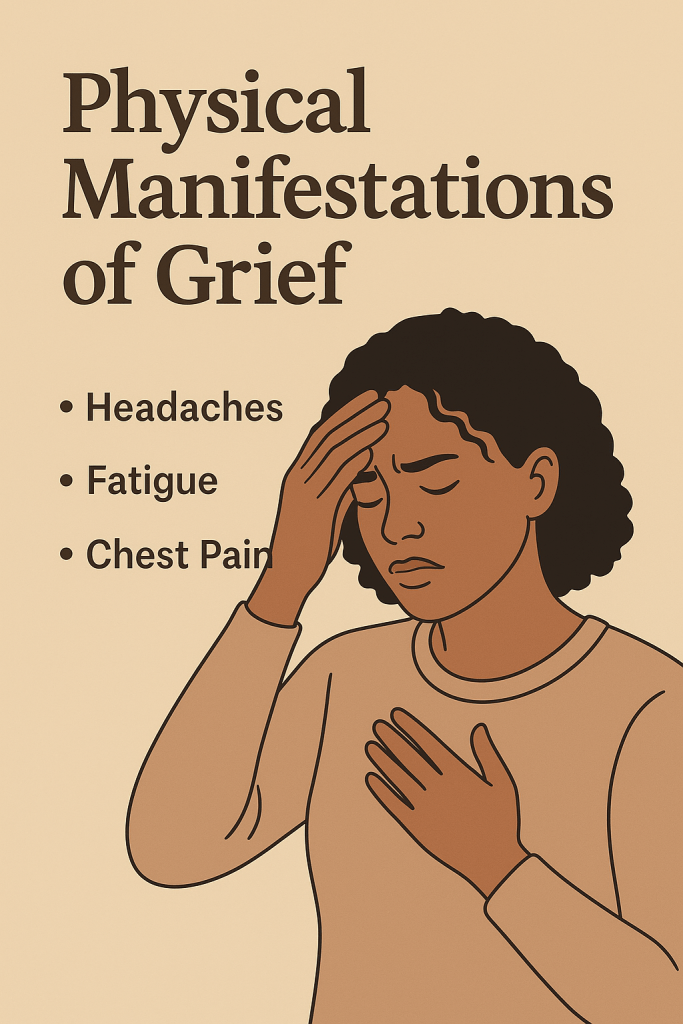
🩶 Common Physical Symptoms of Grief
Grief looks different for everyone, but these are some of the most common physical manifestations of grief:
1. Fatigue and Low Energy
Even if you’re sleeping, grief fatigue runs deep. Your body is working overtime to handle emotional pain. That constant stress drains your energy.
2. Tightness in the Chest or Throat
Many people describe grief as “a weight on their chest.” That’s not poetic exaggeration — it’s real muscle tension caused by stress hormones and shallow breathing.
3. Aches, Pains, and Headaches
Your body may hold grief in your shoulders, back, or jaw. Emotional tension creates physical strain, which is why massages, stretching, or even gentle walks can help.
4. Digestive Issues
Grief often disrupts appetite, leading to nausea, stomach cramps, or changes in digestion. The gut and brain are closely connected, so when your heart hurts, your stomach often does too.
5. Sleep Problems
You may have trouble falling asleep or wake often during the night. Your mind replays memories, and your nervous system stays on alert — even when you’re exhausted.
6. Weakened Immune System
Ongoing stress from grief can lower your immune response, making you more likely to catch colds or feel run down.
🌿 How to Care for Your Body While Grieving
Your body carries your grief. So it also deserves care, gentleness, and attention. These practices won’t erase the pain, but they can make it easier to carry.
1. Listen to What Your Body Is Saying
If you’re tired, rest. Or maybe you need stillness, take it. Sometimes you crave connection, reach out.
Grief has its own language, and your body is often the first to speak it.
2. Move in Gentle Ways
Movement helps release the tension grief traps inside. Try short walks, stretching, yoga, or even simply breathing deeply for a few minutes.
If you need a simple start, we recommend this gentle yoga mat on Amazon — supportive, non-slip, and perfect for slow, mindful movement.
3. Stay Nourished and Hydrated
Grief can numb your appetite, but your body still needs nourishment. Choose easy, comforting foods — soup, toast, tea. Small meals are okay.
Consider keeping a calming herbal tea on hand — this one supports relaxation and helps ease anxiety before bed.
4. Prioritize Sleep — Even If It’s Hard
Sleep disturbances are one of the most common physical symptoms of grief. Try setting a nighttime ritual: dim the lights, avoid your phone, sip tea, breathe deeply.
Soft weighted blankets (like this one on Amazon) can provide grounding comfort and reduce restlessness at night.
5. Practice Calming Techniques for the Nervous System
Grief keeps your body in “fight or flight.” Slow breathing, progressive muscle relaxation, or mindfulness can help your nervous system return to safety.
You don’t have to meditate perfectly — even two minutes of slow, deep breaths can shift your body’s stress response.
6. Allow Touch and Comfort
Physical comfort — a hug, a pet curled beside you, a soft blanket — tells your body you’re safe. Touch helps regulate stress hormones and lowers blood pressure.
🕊 When Grief Becomes Chronic
If physical pain or exhaustion doesn’t improve over time, you may be experiencing complicated grief (read more here), this is when symptoms persist and affect your daily functioning.
Talking to a therapist, grief counselor, or support group can help you find new ways to cope and release what your body is still holding.
You don’t have to face this alone. Professional help doesn’t mean you’re failing; it means you’re giving your mind and body the care they deserve.
🌤 The Body Keeps the Love, Too
As strange as it sounds, the same body that carries pain also carries love.
Your body remembers hugs, laughter, and shared warmth. Those memories live in your muscles, your senses, your heartbeat.
Healing physically from grief isn’t about “getting over” the person you lost — it’s about helping your body feel safe enough to live again.
Be patient with yourself. Rest when you need to. Move when you can. Nourish your body with care, and remember: you’re not just grieving — you’re healing.
🩶 Final Thoughts: Grief Is Both Emotional and Physical
If you’ve been wondering why your body feels so heavy, sore, or tired after loss, you’re not alone.
Grief affects every part of you — body, mind, and spirit. The physical symptoms of grief are a natural response to deep emotional pain, not a sign that something is wrong with you.
Take care of your body as tenderly as you would your heart.
Drink water. Stretch. Rest. Breathe.
Healing may come slowly, but with each small act of care, you remind your body that it’s safe to let light in again.