Part 1 of the “Many Ways We Let Go After Loss” series.
Read also: Part 2 – When the House Isn’t Just a House Anymore and Part 3 – The Phone Number I Couldn’t Delete Yet.
There’s a strange ache that comes when you open the closet and their things are still there — the smell, the way a sleeve falls, the shape of their handwriting on a note you forgot about. Each item feels alive with memory.
Parting with those things can feel like losing them all over again. It’s one of the hardest parts of grief: deciding what to hold on to and what to release.
Why It’s So Hard to Let Go
People often say, “You don’t need to rush.” And they’re right — there’s no schedule for grief.
Letting go of someone’s belongings isn’t about cleaning up. It’s about learning how to live beside the memories — to find space in your heart, even as the physical reminders fade from your shelves.
You might start small — a drawer, a single shelf. Notice which items bring comfort and which ones make it hard to breathe. Some things will stay. Others, one day, you’ll be able to let go.
Letting go doesn’t mean forgetting. Sometimes love is what remains after the objects are gone.
Transforming Items into Keepsakes
For many people, peace comes not from keeping everything, but from transforming what matters most.
A few well-loved shirts can become something new — a memory bear, a patchwork blanket, or even a pillow made from their favorite flannel. These keepsakes offer something to hold when the ache feels heavy.
If you’re not sure where to start, you can have a local quilter or Etsy creator make one for you — or try it yourself with a simple memory-bear or keepsake-blanket kit.
🧵 It’s a gentle way to keep them close while giving their things a new form.
Creating a Memory Box
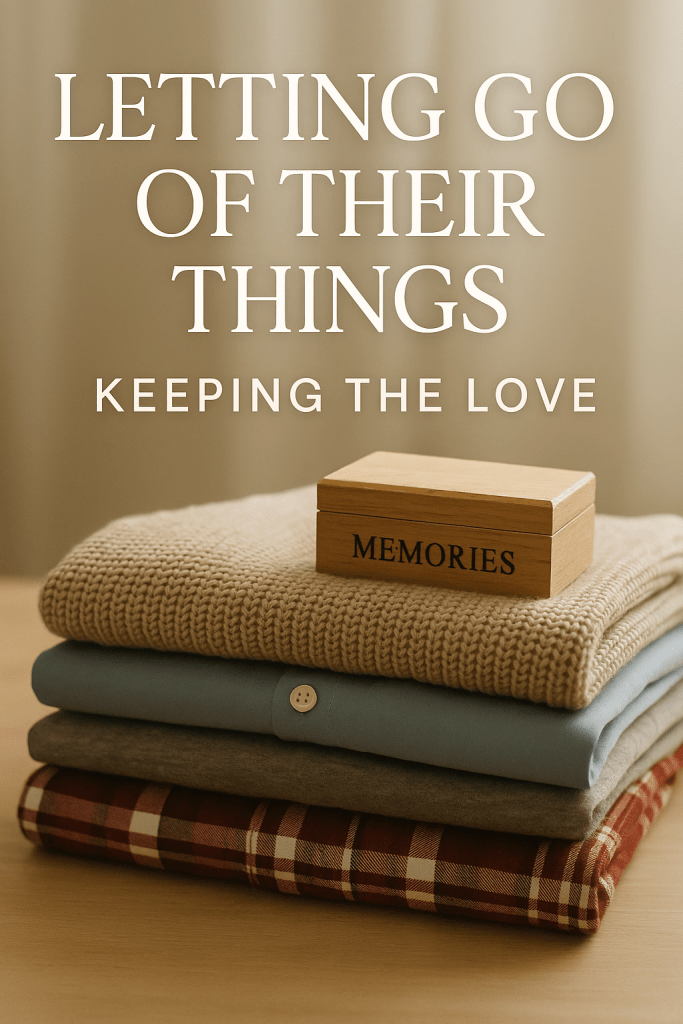
Another way to hold on with intention is to create a memory box — a single space where love is gathered.
It doesn’t need to be large or elaborate. A drawer, a bin, a decorative box — something that says, “This is where I keep what still holds love.”
Inside, place small, meaningful things: a letter, a keychain, a favorite photo, a concert ticket. The rest can go to others who might need them.
Over time, you may realize the items that mean the most aren’t the expensive or obvious ones — they’re the ones that carry stories, fingerprints, and quiet love.
The love isn’t in the objects; it’s already in you.
When You’re Ready
There’s no “right time” to let go — only your time. One day, you’ll look at a space that once hurt to enter and feel a softer ache instead of sharp pain. That’s how you know you’re moving forward, even if just a little.
When you’re ready, you can turn toward the spaces themselves — the rooms and walls that once held everything you shared.
→ Next: When the House Isn’t Just a House Anymore
🌿 Final Thoughts
Letting go of their things is not about erasing them — it’s about creating room for both your grief and your life to exist together.
If you’re finding this part of grief especially hard, talking to a grief counselor or therapist online can help you process these decisions with compassion. Sometimes, sharing those feelings is what makes space for healing.
This reflection is part of my “Many Ways We Let Go After Loss” series. You can read Part 2 – When the House Isn’t Just a House Anymore and Part 3 – The Phone Number I Couldn’t Delete Yet.
Pingback: Part 3: The Phone Number I Couldn’t Delete Yet – Gentle Grief Support from BondedbyArt
Pingback: Part 2: When the House Isn’t Just a House Anymore – Gentle Grief Support from BondedbyArt