When my husband died, I remember feeling like the world had turned upside down — and somehow everyone else just kept living in it. I didn’t know where to go, who to talk to, or even how to explain what I was feeling.
I wanted traditional therapy, but it wasn’t available. My husband passed away during COVID, when it seemed like everyone in the world needed help all at once. Waiting lists were months long, and most therapists weren’t taking new clients. Therapy was also expensive, and I didn’t have the energy to navigate insurance or virtual appointments that never seemed to work out.
So I had to find other ways to cope — small, free places to turn when the nights felt endless and the grief wouldn’t let go. That’s how I started discovering free grief support resources, and honestly, they saved me in more ways than I can count.
Whether you’ve lost a spouse, a parent, a friend, a child, or even a pet, your pain is real. Every kind of loss changes us. That’s why today, I want to share some of the most compassionate and accessible free grief support resources I’ve found — ones that can help you find connection and hope, without adding financial strain.
Why Free Grief Support Resources Matter
Grief doesn’t just hurt emotionally — it drains every part of you. And when you’re trying to rebuild your life after loss, financial stress can make it even harder.
That’s why free grief support resources are so important. They remove one more barrier between you and the help you deserve. Whether it’s a free grief support group, an online chat, or a downloadable workbook, having free options means you can focus on healing, not worrying about cost.
For me, the first time I joined a support group — a free one — I remember feeling awkward. I didn’t say much that first day. But listening to other people talk about their losses reminded me I wasn’t broken; I was grieving. There’s a huge difference.
Free doesn’t mean “less than.” Many of these programs are created by professionals or by people who have walked through loss themselves. And sometimes, those peer-led spaces are the most healing of all.
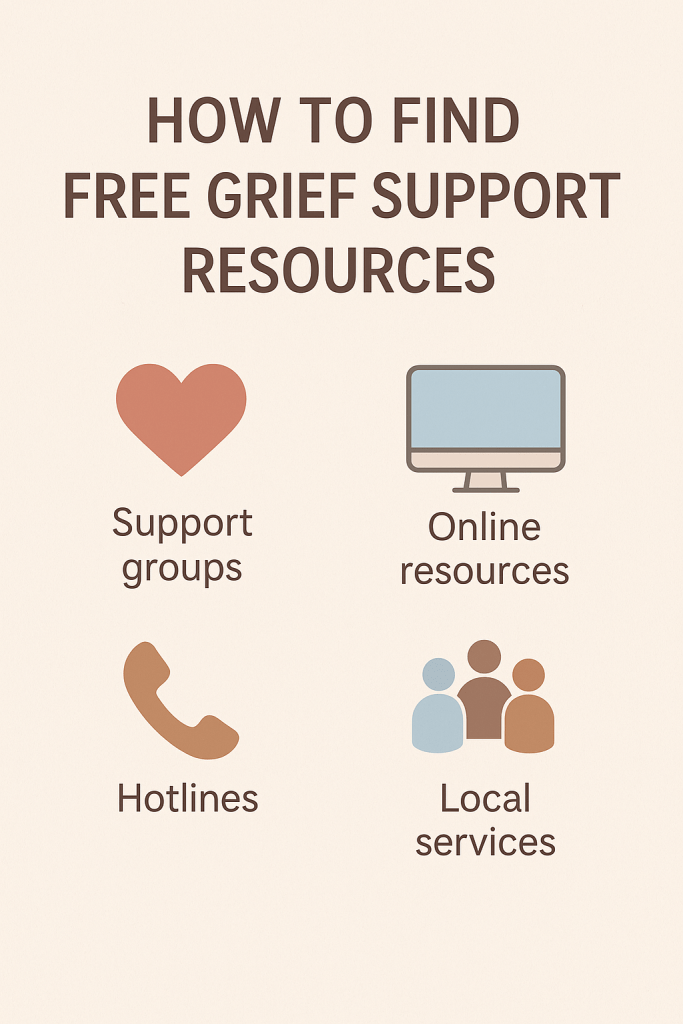
1. Online Communities and Free Virtual Grief Support Groups
If you’re not ready to attend a group in person, or if leaving the house still feels impossible, online spaces can be a lifeline. You can join from your phone, listen quietly, or share when you’re ready.
- GriefShare — One of the largest grief support networks in the U.S. They offer free grief support groups in person and online, often hosted by churches or community centers. Meetings are welcoming and structured, and you’ll find people at all stages of loss.
- My Grief Angels — Offers free virtual grief support groups by type of loss — whether you’ve lost a spouse, parent, friend, or pet. The sessions are informal but compassionate, run by volunteers who’ve experienced grief firsthand.
- 7 Cups — Provides free emotional support chats 24/7 with trained listeners. It’s not therapy, but sometimes you just need someone to talk to in the middle of the night when your thoughts won’t quiet down.
- Refuge in Grief — While not a live support group, Megan Devine’s work here (including her free articles and email series) offers compassionate language for grief. It’s one of my favorite grief resources for feeling understood.
If you prefer something local, many libraries, hospitals, and hospices offer free grief support resources or groups you can join, even if you weren’t a patient. You can often find listings on their websites or by calling community centers.
2. Free Hotlines and Crisis Support (When You’re Overwhelmed)
Some nights, grief feels heavier than others. If you ever find yourself at a breaking point, please reach out. There are free grief support resources that provide confidential help, right now, no matter what time it is.
- 988 Suicide & Crisis Lifeline — Dial 988 in the U.S. to connect immediately with trained counselors. You don’t have to be suicidal to call; they also support people in grief, despair, or emotional crisis. 988lifeline.org
- Crisis Text Line — Text HELLO to 741741 to reach a volunteer crisis counselor. Sometimes just texting someone can help you breathe again. crisistextline.org
- Grieving.com Forums — Free discussion forums where people share experiences and support one another through loss.
3. Specialized Free Grief Support Resources
- CancerCare — Provides free grief counseling and online support groups for those who’ve lost someone to cancer (or any cause, depending on current groups). Sessions are led by licensed social workers.
- The Dougy Center — Focused on children, teens, and families grieving a death. Their site offers free toolkits, videos, and downloadable guides that can help you support grieving kids.
- Good Grief — Offers a directory of free grief support resources and community programs nationwide — helpful for finding something nearby, especially for families.
- My Grief Connection — A curated directory of grief support groups, podcasts, and free events. They update it often and include groups for specific losses like miscarriage, overdose, or sibling loss.
- TAPS — Tragedy Assistance Program for Survivors — If you’ve lost someone who served in the military, TAPS provides free grief support resources, retreats, and peer mentoring for surviving family members.
4. Free Printables, Podcasts, and Journals for Grief Healing
- What’s Your Grief — Hundreds of free grief articles and worksheets you can download.
- Grief Out Loud Podcast — Shares real conversations about loss — validating and comforting.
- Free grief journal prompts
Journaling was one of the first things that helped me start processing. I’d write letters to my husband, questions to the universe, and sometimes just lists of things I missed. You don’t need to be a writer — you just need space to be honest.
5. Local and In-Person Support Options
If you’re craving real faces and shared space, in-person groups can be powerful. Sitting in a room with others who *get it* is different — it reminds you that grief is universal, even if your story is unique.
Start by searching your area for free grief support resources like:
- Churches and community centers (many host free weekly groups open to all)
- Hospices and hospitals (most have bereavement coordinators offering free programs)
- Local mental health nonprofits
- Your library or YMCA (some offer community “healing through loss” meetups)
If you live near Philadelphia, for example, the Philadelphia Medical Examiner’s Office offers free grief counseling for families impacted by sudden loss.
If you’re not sure where to start, call 211 — it’s a free national helpline that can connect you with free grief support resources in your community.
6. How to Choose the Right Grief Support for You
Not every resource will feel like a fit — and that’s okay. You might try a few before one clicks. Here are a few questions to help you decide:
- Do I feel comfortable sharing here?
- Is the group moderated by someone trained or experienced in grief?
- Does it fit the kind of loss I’ve had?
- Does it make me feel supported (not pressured or compared)?
Remember, the best free grief support resources are the ones that feel safe. Trust your instincts. If something doesn’t feel right, it’s okay to step away and try another. Healing doesn’t happen in one place — it happens through many small connections over time.
7. How to Make the Most of Free Grief Support Resources
Once you find something that helps — whether it’s a group, a podcast, or a friend you meet through one of these programs — nurture it.
- Show up consistently, even when you don’t feel like it.
- Don’t force yourself to talk — listening counts, too.
- Combine multiple forms of support (group, journaling, walks, prayer, art, whatever helps).
- Give yourself grace for skipping days or changing direction.
There’s no “right way” to use free grief support resources — only the way that helps *you* feel a little more steady.
Final Thoughts: You Deserve Help, Even If It’s Free
If I could go back to those first months after my husband died, I’d tell myself this: You don’t have to do this alone. You don’t have to be strong all the time. Help doesn’t have to come with a price tag.
There are so many free grief support resources waiting for you — places where your story matters, your tears are understood, and your grief is safe. Whether it’s a stranger who listens at 2 a.m., a local group that meets in a church basement, or a quiet podcast that helps you fall asleep — it all counts.
Take the next small step. Pick one resource from this list and reach out today. You deserve support, and it’s okay to accept it. Healing starts with connection — and sometimes, that connection starts for free.
You’re Not Alone
If you found this post helpful, share it with someone who might need these free grief support resources too. You never know whose heart it might reach. 💛
If this post resonated with you, here are a few thoughtful Amazon finds you might also love:
- Gratitude or reflection journal
- Soft throw blanket for cozy evenings
- Simple self-care candle or diffuser
As an Amazon Associate, I earn from qualifying purchases.