
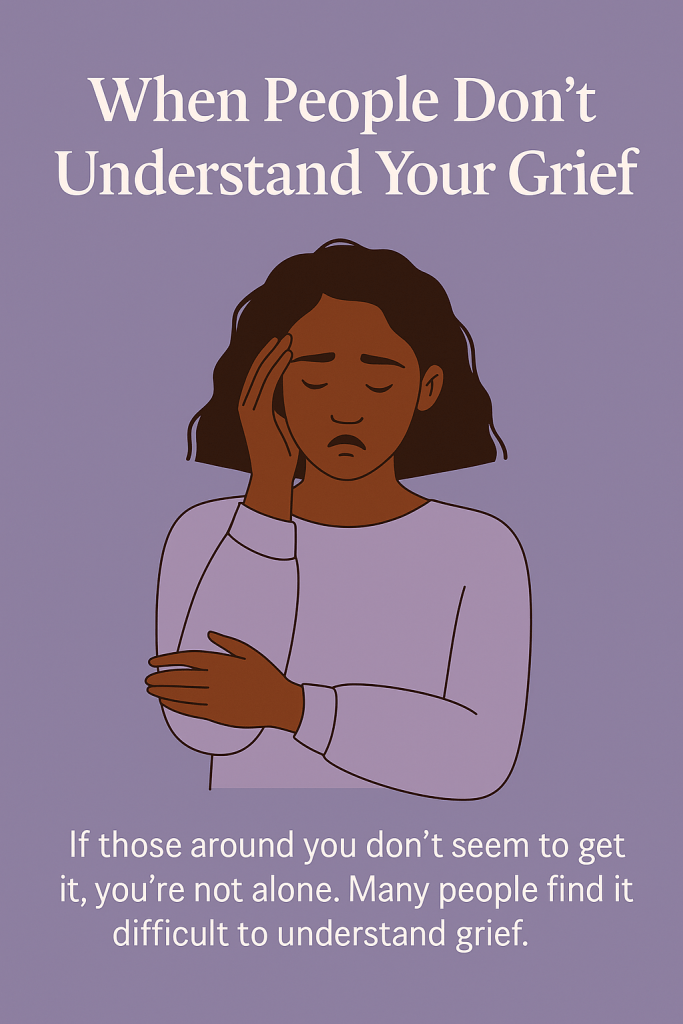
Grief can be incredibly lonely, even when you’re surrounded by people who love you. You may have friends who check in at first and then fade away, family who wants you to “move on,” or coworkers who avoid mentioning your loss because they don’t know what to say.
It’s not that they don’t care — they just don’t get it. And that misunderstanding can make you feel like you’re grieving in silence, even in a crowded room.
💔 Why People Struggle to Understand Grief
Most people mean well, but unless they’ve experienced a deep loss themselves, they often underestimate how grief changes everything.
They might think:
- “It’s been a few months; you must be doing better.”
- “At least they’re in a better place.”
- “You’re so strong — I could never handle that.”
What they don’t see is that you’re still learning how to live in a world that looks completely different now. That “strength” they admire is often just survival mode — doing what you can to make it through the day.
The truth is, grief doesn’t have an expiration date. It changes shape, but it doesn’t vanish. And when the people around you don’t understand that, it can deepen the ache of loss.
🌧️ The Isolation That Comes With Grief
There’s a unique kind of silence that comes when people stop asking how you are.
It’s not malicious — they think they’re giving you space, but it can feel like abandonment. You might stop talking about your loved one because you don’t want to make others uncomfortable. You might start pretending you’re “okay” just to keep the peace.
But all that pretending is exhausting. You deserve people who can hold space for both your love and your loss.
Grief already takes so much energy. Trying to manage other people’s reactions shouldn’t be another burden.
🫶 You’re Not Too Much — They’re Just Unequipped
If you’ve ever felt like your grief made people pull away, please know this:
It’s not because you’re too emotional, or broken, or stuck in the past. It’s because most people have never been taught how to be there for someone in deep pain.
They want to help, but they don’t know how. They try to fix what can’t be fixed — offering advice when all you needed was understanding.
So, instead of hiding your grief, remind yourself:
“My feelings are valid. My grief deserves space. And I am allowed to speak about my loved one.”
When you stop filtering your pain to make others comfortable, you create room for real healing — and for deeper, more honest connections with the few who can understand.
🌷 Finding the People Who Truly Get It
You might find that your circle shifts after loss — and that’s okay.
Some people will quietly fade away, but others will show up in unexpected ways. The ones who stay, who listen without judgment, who say your loved one’s name out loud — those are your people now.
If you haven’t found that yet, there are places you can.
Online grief groups, local meet-ups, and communities for widows and widowers (or those who’ve lost a parent, child, or friend) can help you feel less alone.
You don’t have to explain why you’re sad again. They already know.
You might even find comfort in grief blogs, podcasts, or books — gentle spaces where people put words to what you’re feeling when your own words won’t come.
🌼 How to Protect Your Heart Around Those Who Don’t Get It
You can’t control how others show up, but you can protect your peace.
Here are a few small ways to do that:
- Lower expectations.
Not everyone will understand your grief, and that’s okay. Focus on the ones who try — even if they don’t get it right every time. - Speak your boundaries clearly.
“I’m not ready to talk about that yet,” or “Can we just sit together for a bit?” are gentle ways to guide others on what helps (and what doesn’t). - Create your own rituals.
If others don’t honor your loved one’s memory, you still can — light a candle, write a letter, play their favorite song. Your love doesn’t need an audience to be real. - Don’t shrink your grief.
You don’t have to hide how much you miss them to make other people comfortable. The right people will hold that space with you. - Find safe outlets.
Journaling, therapy, or creative expression can help release what can’t always be spoken aloud.
Grief changes relationships — but it can also deepen the ones that matter most.
🌤️ You Deserve to Be Seen in Your Grief
Grief isn’t a problem to solve — it’s love that doesn’t have a place to go anymore.
And when you’re surrounded by people who can’t understand, that love can start to feel heavy.
But remember: you don’t have to carry it alone.
The people who truly see you — whether it’s one person or a community online — will remind you that your love still matters, your story still matters, you still matter.
And slowly, that understanding will help the loneliness feel a little less sharp.
🌸 Gentle Reflection
“The people who stay with you through your grief don’t need to understand every part of it — they just need to be willing to listen.”
If you’re feeling unseen in your grief, I hope you know this: you are not invisible, you are not too much, and you are not alone.
— — — — — —
If you’re finding comfort here, you might enjoy more reflections and gentle grief support from Gentle Grief Support by Bonded by Art — a space for healing hearts to rest, reflect, and feel less alone.
