
When someone you love dies, guilt has a way of slipping into every crack of your healing. You replay conversations, you analyze choices. You whisper, “I should have…” into the quiet moments. It makes you question your goodness, your love, your effort — even when you gave everything you had.
Guilt after loss is common, but that doesn’t make it any less heavy.
It sits on your chest, steals your sleep, and becomes a loop your brain can’t turn off.
The truth? Guilt is not a sign that you failed. Guilt is a sign that you loved.
And there are gentle, realistic ways to soften it.
Below are 10 gentle ways to cope with guilt after loss — practical tools you can use when the “what ifs” feel loud.
Here is a short video with a gentle reminder about guilt after loss before you move into the steps.
If you’re also struggling with anxiety, triggers, or trouble sleeping, these posts may help:
- Guilt After Loss: Why We Blame Ourselves for What We Couldn’t Control
- Is It OK to Feel Happy After Loss? Why Joy Doesn’t Mean You’ve Forgotten
- The Anxiety That Comes With Grief (And How to Calm It)
1. Name the Type of Guilt You’re Feeling
Naming the guilt helps you understand what your heart is actually trying to say.
Event guilt
- “I should have seen the signs.”
- “I should’ve made them go to the doctor.”
Survivor guilt
- “Why am I still here?”
- “Why didn’t life take me too?”
Joy guilt
- “Is it wrong to smile again?”
- “Does being happy mean I didn’t love them enough?”
You’re not broken — you’re grieving.
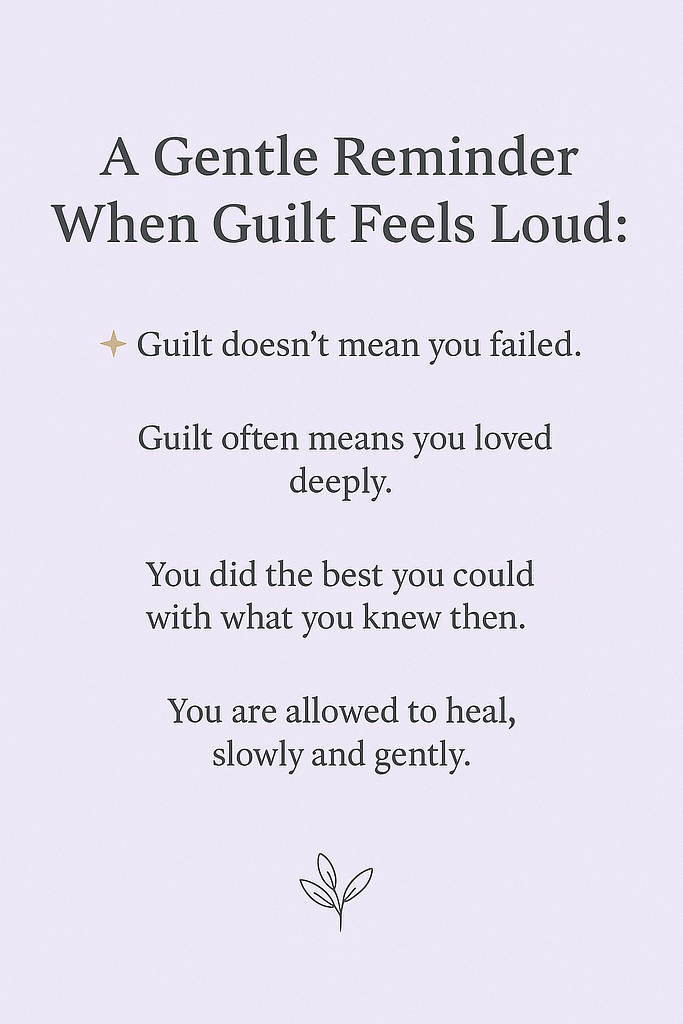
A Gentle Reminder When Guilt Feels Loud:
✨ Guilt doesn’t mean you failed.
✨ Guilt often means you loved deeply.
✨ You did the best you could with what you knew then.
✨ You are allowed to heal, slowly and gently.
2. Stop Using Hindsight as a Weapon
Your brain knows more now than it did then — and it uses that knowledge to rewrite the past.
I made the best choices I could with the information I had at the time.
You weren’t standing in the future. You were doing the best you could.
3. Ask Yourself: “What Would I Say to a Friend?”
If your best friend said:
- “It’s my fault.”
- “I should’ve done more.”
- “Maybe I didn’t love them enough.”
Would you agree with them?
Or would you say:
You loved them. You did what you could. None of this was your fault.
Offer yourself the same compassion and grace.
4. Write the Guilt Thought Down — Then Challenge It
When guilt lives in your mind, it grows louder.
Write the thought down, then gently question it.
Guilt thought: “I should’ve saved them.”
Questions to challenge it:
- Did I truly know what was going to happen?
- Did I have the power to control this outcome?
- Would anyone else realistically have been able to stop this?
- What did I actually do to help?
- Am I blaming myself for things no human can control?
Most guilt softens under honesty.
5. Replace “Should Have” With “Wish I Could Have”
Just a small language shift, gives a HUGE emotional shift.
Instead of:
“I should have done more.”
Try:
“I wish I could have done more, because I loved them so much.”
“Should have” punishes you.
“Wish I could have” honors your heart.
6. Remember What They Would Say to You
What would they say if they saw your guilt now?
Would they want you:
- blaming yourself?
- punishing yourself?
- suffering every day?
Or would they want you at peace?
Imagine them saying:
You did your best. You loved me. Please don’t spend your life punishing yourself for something you couldn’t control.
You know their heart, even now.
7. Take a Gentle Break From the “Guilt Loop”
When you feel guilt spiraling:
- Put your hand on your chest.
- Breathe slowly.
- Say to yourself: This is a guilt loop. I don’t have to follow it all the way down.
This interrupts the spiral long enough for you to come back to yourself.
8. Allow Moments of Joy Without Punishing Yourself
Joy does not erase grief.
It does not erase love.
Joy does not mean you’ve forgotten.
My joy does not dishonor my grief.
My joy does not mean I loved them any less.
You are allowed to carry both: the ache and the light.
9. Notice When Guilt Is Really a Sign You Need More Support
Sometimes guilt is actually:
- trauma
- anxiety
- depression
- fear of moving forward
- feeling unworthy of healing
If guilt:
- shows up every day
- feels heavy and consuming
- keeps you awake
- makes you feel stuck
- makes you feel like a bad person
…it may be grief asking for help, not punishment.
When Guilt Feels Too Heavy to Untangle Alone
If guilt won’t let you breathe, talking with a grief-informed therapist can help you sort through the “should have” thoughts and find kinder, truer ones.
Get gentle online grief support →
10. Give Yourself Permission to Be Human
You loved deeply, and you cared fiercely. You did your best in an impossible moment.
We are all human so sometimes we:
- miss signs
- get tired
- don’t know the future
- cannot control other people’s choices
Your guilt is not proof of failure — it’s proof of love.
You deserved compassion then.
You still deserve it now.