
Feeling happy after loss can be confusing. You might catch yourself laughing at a movie, smiling at something small, or feeling peaceful for the first time in weeks—then the guilt hits.
A voice inside whispers, “How can you feel happy when they’re gone?”
That guilt can be one of the most surprising parts of grief. It sneaks in just when you start to feel a little better, making you question whether you’re “moving on” too quickly or disrespecting the person you lost.
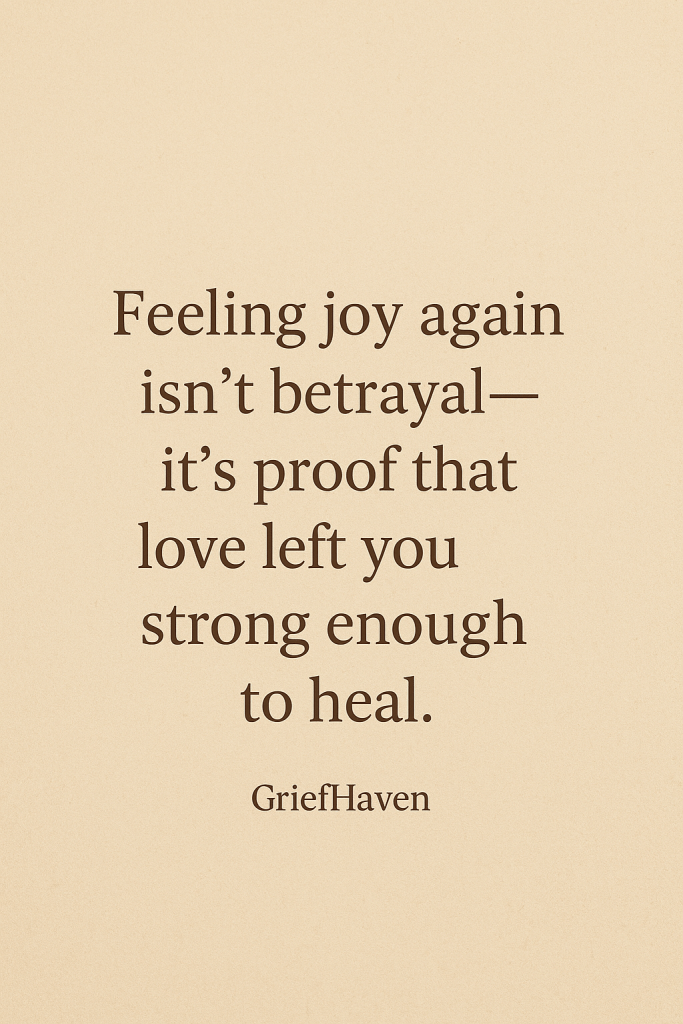
But here’s the truth: feeling happy again doesn’t mean you’ve stopped grieving. It means your heart is learning how to carry both love and loss at the same time.
Before we continue, here’s a short video sharing five gentle truths about feeling joy after loss — especially if you’ve been struggling with guilt.
Why We Feel Guilty for Being Happy
Guilt after grief is deeply human. (Read more here) It often comes from love, loyalty, and a desire to honor the person who’s gone. When you’ve spent months or even years in sadness, joy can feel almost disloyal—like you’re betraying the depth of your pain.
But grief isn’t a test of devotion. You don’t prove your love by staying sad forever.
Happiness doesn’t erase your loss, and it doesn’t mean you’ve forgotten them. It simply means that for a moment, your heart found a way to breathe again.
You might feel guilty because:
- You believe being happy means “moving on.”
- You’re afraid others will think you’ve forgotten.
- You feel undeserving of joy when they can’t experience it.
- You’ve been in pain so long that peace feels wrong.
None of those beliefs are true. They’re just grief trying to make sense of something that doesn’t have clear rules.
Grief Isn’t All Sadness
When we think of grief, we picture tears, loneliness, and heartbreak. But grief is far more complicated—it’s not just one emotion, it’s a whole landscape of them.
There are moments of numbness, waves of anger, quiet acceptance, and yes, brief flickers of happiness. Those moments don’t cancel your grief. They exist inside it.
It’s possible to miss someone with your entire heart and still feel joy. You can laugh with friends, enjoy a sunset, or feel a moment of peace—and still carry your loss.
You’re not betraying your grief by feeling better. You’re simply human, experiencing the range of what it means to live after loss.
The Healing Role of Happiness
When joy begins to show up again, it’s actually a sign that your body and mind are trying to heal. After long periods of emotional strain, your nervous system naturally seeks balance. Small moments of lightness help you recover from the intensity of pain.
You might notice tiny moments first:
- The way sunlight hits a photo of them.
- A smell that reminds you of good memories instead of only sadness.
- A laugh that escapes before you can stop it.
These aren’t betrayals—they’re steps toward balance. They mean your love for them has settled into a place where it can coexist with living.
Joy doesn’t replace grief—it grows beside it.

How to Let Yourself Feel Joy Without Guilt
Healing doesn’t mean forgetting. It means learning how to live with what’s missing.
Here are gentle ways to let joy back in without feeling guilty for it:
1. Remind yourself what they’d want for you.
If they loved you, they’d want you to laugh again. To find light again. To live in a way that keeps their memory alive through your happiness, not your pain.
2. Let joy and grief exist together.
You don’t have to “pick” between being happy and being sad. You can miss them and smile in the same breath. Both are part of healing.
3. Redefine what honoring them looks like.
Honoring someone isn’t about staying miserable. It’s about carrying their memory forward in the way you live, love, and show kindness.
4. Notice joy without judging it.
The next time you catch yourself smiling, try simply saying, “It’s okay to feel this.” Allow joy to be part of your new emotional landscape.
5. Create rituals that bridge memory and life.
Light a candle, keep a favorite song in your playlist, write them letters—these acts allow you to stay connected while still moving forward.
You’re Allowed to Smile Again
Feeling happy doesn’t mean the love has faded.
It means your heart is stretching wide enough to hold both grief and joy.
You will always miss them—but you are also allowed to keep living, to laugh again, to find peace in small, ordinary moments.
Healing doesn’t erase your love; it expands it.
And that expansion is the quiet, beautiful proof that they’re still part of you—every time you let light back in.
Pingback: 11 Things I Wish I Knew About Grief Before I Lost My Husband - Healing After Loss
Pingback: Guilt After Loss: Why We Blame Ourselves for What We Couldn’t Control - Healing After Loss