
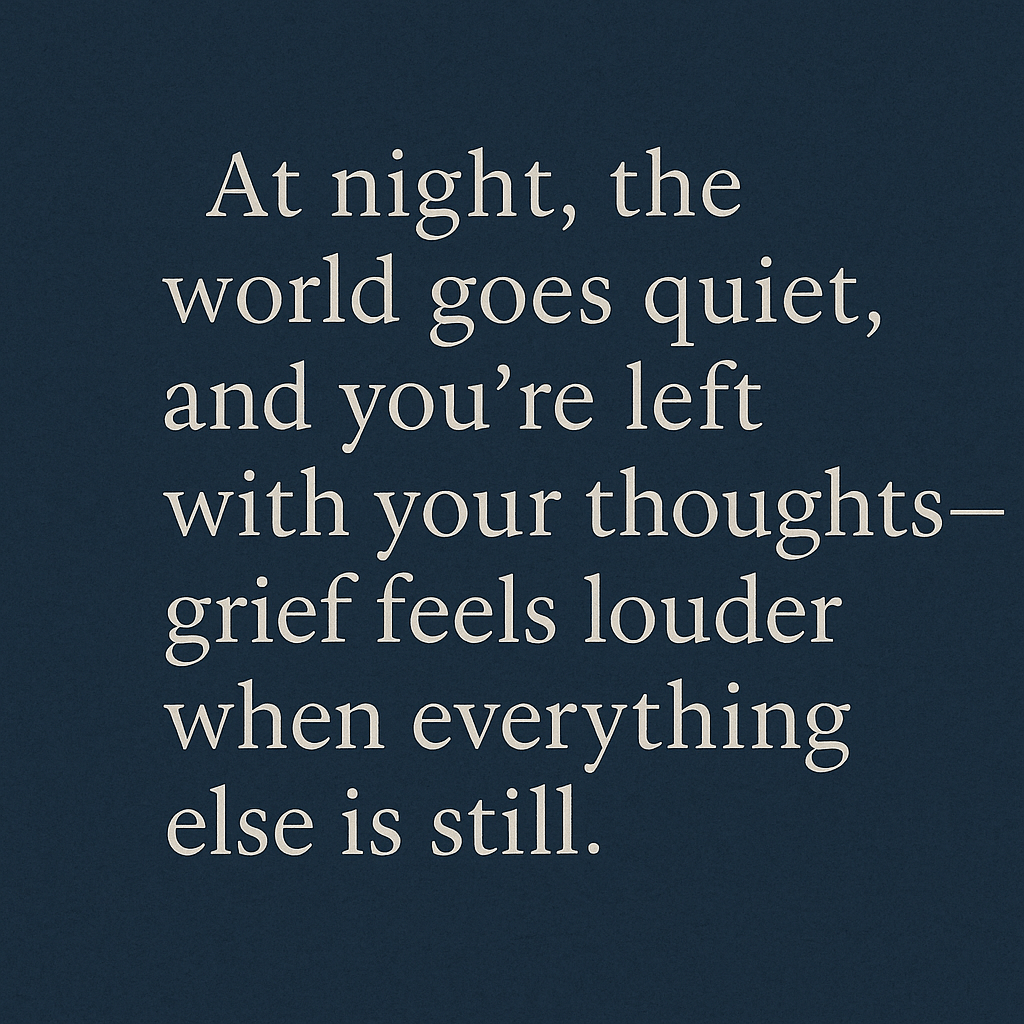
When the sun sets and the world quiets down, grief often gets louder. Many people say their nights are the hardest, when the distractions of the day disappear and all that’s left are their thoughts. I know that feeling well.
For me, the nights after my husband died felt unbearable. During the day, I had things to occupy me — errands, conversations, chores — but once night fell, I had no choice but to sit with my thoughts. I didn’t sleep well for years after his death. Even now, I still struggle with restless nights, as if my mind just can’t settle down long enough to rest.
If you’ve ever wondered why grief feels heavier at night, you’re not alone. Here are some of the reasons why evenings can be so painful, along with gentle ideas to help you through.
1. The Silence Feels Loud
During the day, life is noisy — traffic, phones, people around you. At night, the quiet makes absence more noticeable. The empty spaces in your home seem bigger, and the silence can amplify your grief.
2. Fatigue Intensifies Emotions
Exhaustion wears down your ability to cope. Little stressors that felt manageable earlier can hit harder at night. When you’re tired, emotions feel bigger and harder to regulate.
3. Nights Highlight Absence
Bedtime routines are intimate. Whether it’s lying in bed without your spouse, missing a “goodnight” text, or facing an empty chair at the dinner table, nights magnify the spaces where love used to live.
4. Anxiety and Racing Thoughts
When everything slows down, your mind speeds up. Memories, regrets, “what ifs,” and fears often come flooding in. It can feel impossible to turn them off long enough to sleep. Read more about the anxiety that comes with grief here
5. The Body’s Natural Rhythm
Science tells us that our cortisol (stress hormone) levels shift at night, which can make us more vulnerable to stress and sadness. Grief taps into this rhythm, leaving many people restless or anxious as the night wears on.
Coping Strategies for Grief at Night
If nights are especially hard for you, here are some gentle ways to find comfort:
- Create a calming nighttime ritual. Journaling, lighting a candle, or playing soft music can signal safety and rest to your body.
- Reach for comfort objects. A weighted blanket, a favorite sweater, or even a pillow that smells like your loved one can help.
- Practice grounding exercises. Simple breathing — in for four, out for six — can calm racing thoughts.
- Give yourself permission to rest, even if you don’t sleep. Sometimes just lying down in the quiet, with no pressure to drift off, can help your body recover.
- Remind yourself: morning always comes. Nights can feel endless, but they pass. And each morning, the weight often feels a little lighter.
Final Thoughts
Grief at night can feel unbearable, but you’re not facing it alone. So many of us lie awake with the same racing thoughts, the same ache, the same longing. If your nights are heavy, know that it’s not because you’re weak — it’s because grief is demanding to be felt.
Be gentle with yourself. Even in the longest nights, your heart is still learning how to carry love and loss together. And little by little, the nights do get softer.
— — — — — —
If you’re finding comfort here, you might enjoy more reflections and gentle grief support from Gentle Grief Support by Bonded by Art — a space for healing hearts to rest, reflect, and feel less alone.

Love this. Thanks for sharing.
Thanks for reading
Pingback: 11 Ways to Sleep When Grief Keeps You Awake – Gentle Grief Support from BondedbyArt