
Disclosure: This post may contain affiliate links. As an associate, I earn from qualifying purchases. This means I may receive a small commission if you choose to make a purchase through one of my links, at no extra cost to you. I only share items that genuinely bring comfort, calm, or creativity.
🌿 Intro
When I first lost my husband I asked myself “how long does grief last?”, I desperately hoped there was a clear answer. Weeks? Months? A year? If only grief worked on a timeline, maybe I could have circled a date on the calendar and told myself, “Just make it until then.” But the truth is grief doesn’t follow rules. It doesn’t fit into neat stages or tidy deadlines. It rises and falls like waves, sometimes gentle, sometimes overwhelming, always unpredictable. And while every grief journey is different, there are common truths that can help us understand why grief can last a lifetime—even as healing slowly finds its place alongside the pain. Because grief doesn’t have an expiration date. It isn’t something you “get over.” But it does change.
Sometimes it helps to hear it said out loud, so I recorded a short video talking through how long grief can really last.
🌿 Why There’s No Single Timeline
Grief is as unique as the person who is grieving. No two journeys are the same, and no calendar can tell you when it’s “supposed” to be over. The relationship you had, the circumstances of the loss, your background, culture, and support system all play a role in how grief unfolds.
And here’s the truth: there’s no wrong timeline. If you’re still struggling months or years later, that doesn’t mean you’ve failed. It means you loved deeply.
🌿 What Experts Say
You’ve probably heard of Elisabeth Kübler-Ross’s “five stages of grief” — denial, anger, bargaining, depression, and acceptance. She and David Kessler explored this more deeply in their book On Grief and Grieving. These stages were originally meant to describe the emotions of people facing their own terminal illness, not those grieving a loved one. Still, many people find the framework helpful.
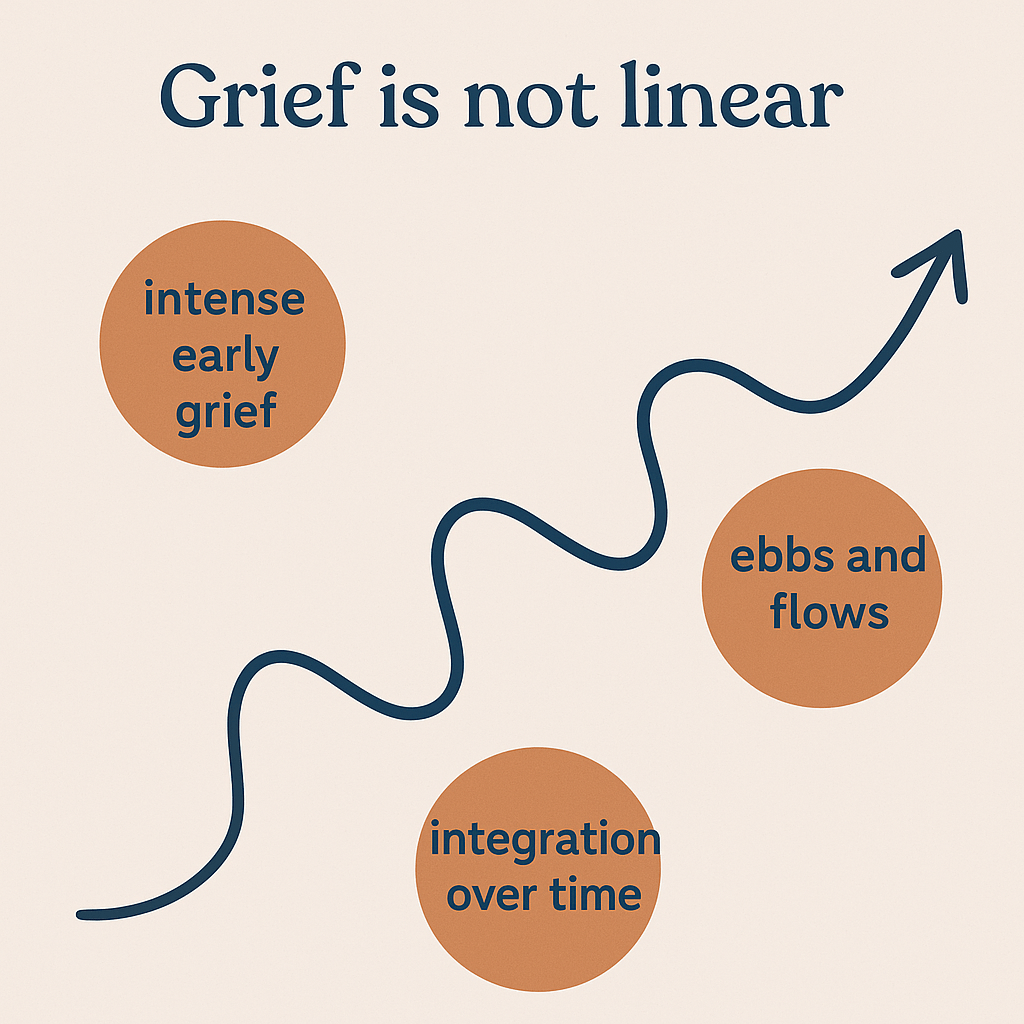
But grief is not linear. You don’t check off each stage and graduate to being “done.” You may move forward, then backward, then skip a stage, or feel two at once.
Most people describe grief as waves: overwhelming at first, crashing down often and hard. Over time, the waves space out. You might go hours, then days, without being knocked off your feet. But anniversaries, birthdays, and even random little reminders can bring the storm back.
🌿 My Experience with Grief’s Timeline
For me, the first year was unbearable. I was just trying to survive each day, each hour. Panic attacks left me gasping, and I had to remind myself over and over: You will be okay. Not the same, but okay. That mantra was a lifeline.
Then came the second year. And to my surprise, it was in some ways harder. The shock had worn off, and the permanence of my husband’s absence settled in. I even wrote a whole post about this: Why the Second Year of Grief Can Feel Harder.
Now, five years later, grief is still with me — but it takes up less space. It hasn’t disappeared. It has simply softened.
🌿 Signs You’re Healing (Even If It Doesn’t Feel Like It)
Sometimes you don’t notice healing until you look back and realize how far you’ve come. Here are a few quiet signs:
- A smile sneaks back in when remembering your loved one.
- Daily tasks don’t feel as impossible.
- The panic and tears aren’t constant anymore.
- You find yourself able to plan or hope for the future, even in small ways.
Healing doesn’t mean forgetting. It means learning to carry the love in a new way.
🌿 When to Seek Extra Support
There’s a difference between grief and depression, but they can overlap. If you feel stuck in despair, unable to function, or if the pain hasn’t eased at all after a long stretch of time, extra support may help.
For me, traditional therapy didn’t work. It felt so hard to sit down and talk to a stranger about my pain. Even though she was trained, it seemed like she still couldn’t help. What did help was connecting with online grief groups and eventually creating this blog. It gave me an “anonymous” way of sharing my feelings and finding comfort in others who understood.
I also realized later that I wasn’t just grieving — I was depressed and anxious too. And that’s okay. There’s no shame in taking medication to even yourself out or seeking medical help. Sometimes grief can open the door to deeper struggles, and getting support in whatever form works for you is a sign of strength, not weakness.
Everyone’s path is different. Some people find therapy life-changing; others find community, journaling, or creative outlets more healing. The important thing is to reach for the kind of support that feels right for you.
🌿 Grief Doesn’t End, It Evolves
There isn’t one simple answer to the question, “How long does grief last?” Because grief isn’t something you finish—it’s something you learn to carry. Over time, the sharp edges soften. The waves don’t crash as hard. Life grows around the loss, even though it never erases it. I’ll never stop missing my husband. But I’ve learned that grief isn’t just about endings — it’s also about carrying love forward into a new chapter.
If you’d like to read more, you might find comfort in exploring the stages of grief I’ve written about, or how the second year of grief can feel unexpectedly harder.
💜 And if you’re walking this road right now, I’d love to hear your experience. How has your timeline of grief unfolded? Share in the comments—I promise you’re not alone.
If you’d like more gentle reads on grief and healing, I’ve gathered some of my favorites in my Grief Bookshelf.
Pingback: The Loneliness of Widowhood: Learning to Live in the Quiet – Gentle Grief Support from BondedbyArt